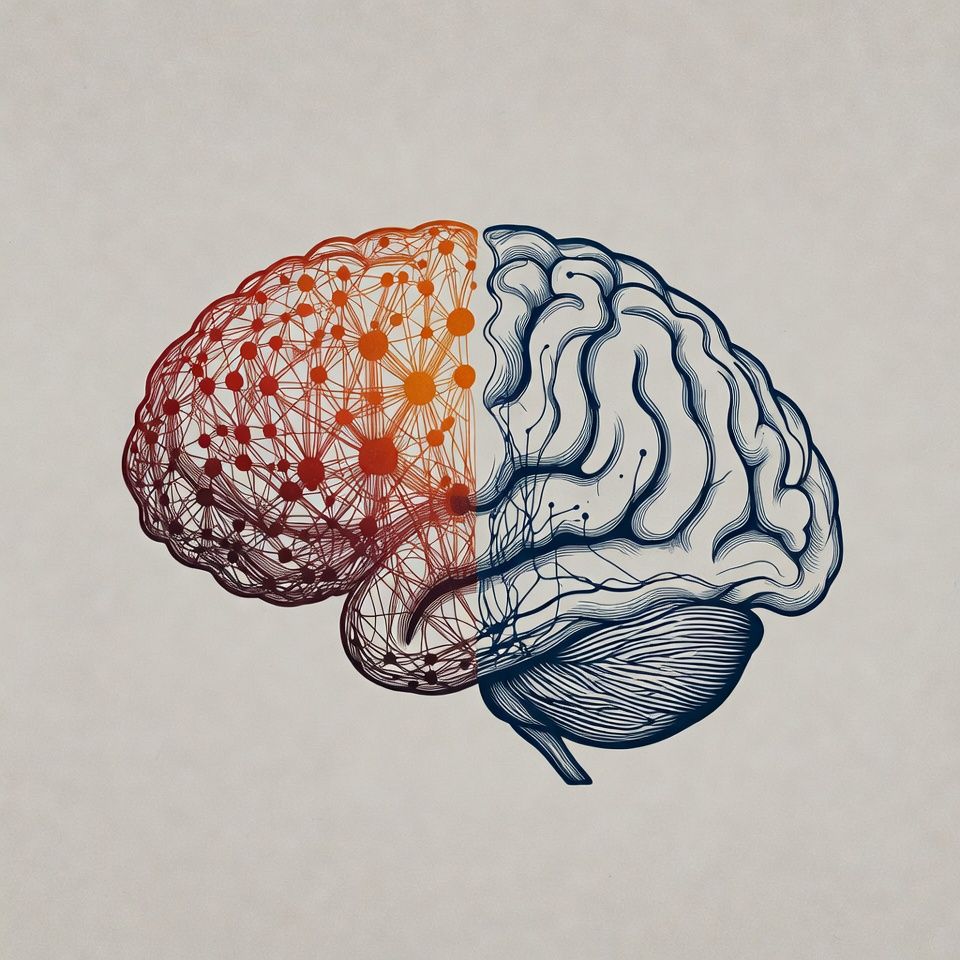
For years I thought I was lazy. The pattern was consistent - I’d lock onto a problem and disappear into it for 12 hours straight. Sometimes I delivered something really impressive. Sometimes I didn’t deliver anything.
People saw the output. They didn’t see what happened between sprints: I could hyperfocus for hours on research and strategy. Dopamine from learning kept me going. The last 2% - documentation, polish - my brain refused to engage. The engine wouldn’t turn over.
A few years ago, my wife showed me an interview about neurodiversity and symptoms of ADHD. “This sounds exactly like you,” she said.
Hyperfocus, procrastination, perfectionism, unease - I ticked the boxes. DIVA test confirmed it.
That’s when all the pieces came together. This wasn’t a discipline problem - I’d been running a different operating system and measuring performance against someone else’s benchmark.
This episode of Andrew Huberman’s podcast on ADHD helped me understand the mechanisms behind that.
Here’s the flow I designed:
- I set timers to remind me about taking a break. That prevents 8-hour burns and immediate crashes.
- AI assistants became my everyday companions. They track what’s open, remind me what matters, and push me toward done over perfect.
- I switched to energy-based planning. Every morning I rate my energy (1-10) and match tasks accordingly. High-energy: complex problems. Low-energy: maintenance and admin.
- I designed systems around how I actually function. High-novelty tasks when my brain wants novelty. Low-novelty in short bursts.
I finally stopped “fixing myself” and started optimizing tasks for how my brain operates.
I apply that schema everywhere. I can relate with people struggling with tasks that are effortless for others, and it does not matter if they have a diagnosis or don’t need it. Each brain is wired differently and has its own limitations.
But understanding that something is hard doesn’t mean you don’t do it. The boring tasks still need to get done. But maybe not the “normal” way - maybe in 5-minute bursts, maybe paired with someone, maybe using AI to handle the parts your brain refuses to engage with.
That’s the leadership lesson. I don’t expect everyone to have the same working memory, attention span, or energy curve. I build an environment that accounts for variability instead of demanding uniformity, and focus on results instead of the path.
That’s not accommodation. That’s reality, not theory.