TL;DR: $27 billion in capital moves this week signal AI infrastructure consolidation. Nvidia controls training+inference via Groq acquisition. ServiceNow builds agent control layers. Off-boarding procedures become security-critical when AI accelerates insider threats. Infrastructure constraints, not software, now dominate 2026 roadmaps.
The Reality Check
I spent the last week digging through infrastructure and security reports, and honestly, it forced me to rewrite my entire perspective on 2026.
As tech leaders, we usually live in the software layer: we talk about prompts, agents, and custom workflows. But recent moves by the industry giants made one thing painfully clear: the software party is now being dictated by the people pouring the concrete and buying the silicon.
Over $27 billion in capital moved in just two deals this week. It’s a brutal reminder that if you are planning a large-scale AI rollout for 2026, the physical foundation of your strategy just shifted.
1. The “Licensing” Checkmate ($20 Billion)
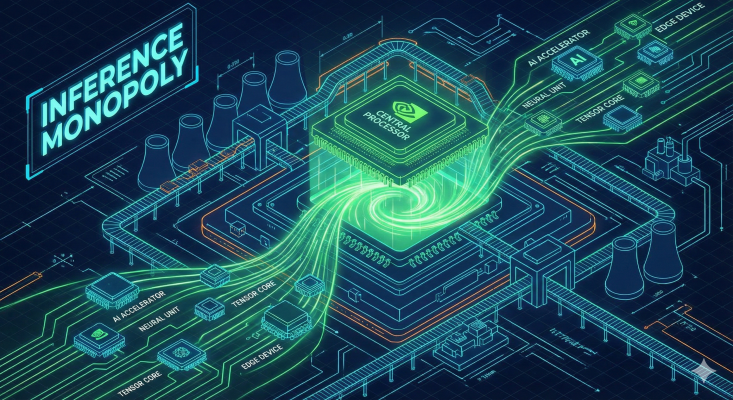
Nvidia just dropped a massive $20 billion technology licensing deal with Groq.
It’s a brilliant strategic move to avoid antitrust investigations. Nvidia isn’t buying the whole company; they are “extracting” the brain. They’ve licensed Groq’s ultra-fast LPU (Language Processing Unit) technology and hired their top talent, including founder Jonathan Ross.
The Strategic Deep Dive:
Why did Nvidia do this? Because they know their vulnerability.
GPUs (like the H100) are unparalleled for Training—crunching massive datasets in parallel. But for Inference (running the model for users), they are energy-hungry and expensive.
Groq’s LPU architecture was the only viable threat, offering blazing speed and lower latency for sequential processing. By absorbing this tech, Nvidia neutralizes the competition. They now control the entire lifecycle: from training the model to serving it.
For CTOs:The “hardware diversity” argument just got weaker. The “compute tax” is being consolidated into a single, massive monopoly.
2. The Agentic Shield ($7.75 Billion)
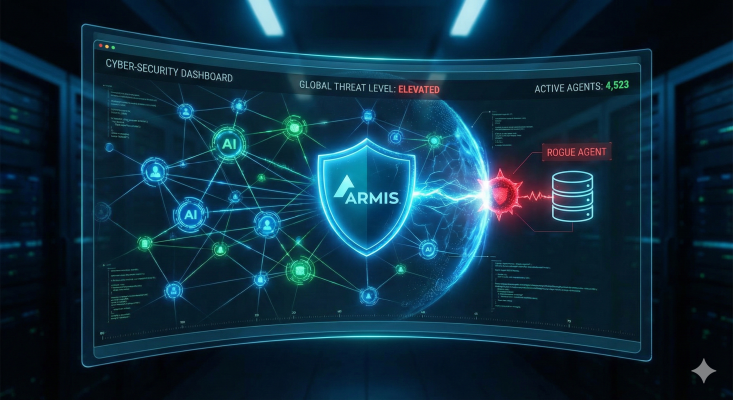
ServiceNow announced its agreement to acquire Armis for $7.75 billion.
This is the largest deal in ServiceNow’s history, and it has one goal: building the"AI Control Tower.“As we prepare to unleash autonomous agents into our networks, the industry is terrified of losing control.
Why this matters (Trust Engineering):
Most enterprises have zero visibility into what their “non-managed” devices (IoT, OT, medical) are doing. Armis fixes that visibility gap. ServiceNow manages the workflows.
When you combine them, you get a “kill switch.” If an autonomous AI agent tries to access a restricted OT device or modify a production database in a way that violates policy, the system can detect and block it in milliseconds. Without this layer, “Agentic AI” is just a fancy name for “unmanaged risk.”

3. The “Insider” Reality (Coupang)
The investigation results regarding the Coupang breach (33 million users) should be a wake-up call for every CISO.
The culprit wasn’t an external hacker group; it was a former IT engineer using an authentication key that remained active after their termination.
The Lesson:
In 2024, an insider stealing data was a slow process. In 2026, an “insider” armed with an AI script is a weapon of mass destruction. They can exfiltrate millions of records in a single night by mimicking normal traffic patterns.
The fallout at Coupang proves that our off-boarding procedures are still manual and flawed. In an era where AI accelerates everything—including theft—a forgotten API key is a loaded gun.
2026 Action Plan for Leaders:
Re-evaluate Your Hardware Strategy:With Nvidia consolidating the market, don’t bank on “cheap, alternative chips” saving your budget. Secure your compute contracts now.
Build the Shield First:Do not deploy autonomous agents with write-access unless you have an automated visibility layer. “Human oversight” is too slow for machine-speed mistakes.
Automate Hygiene:Audit your dynamic API keys and off-boardingtoday. If your off-boarding process involves a spreadsheet, you are already vulnerable.
2026 isn’t about “trying AI.” It’s about building a scalable, trusted factory.
Frequently Asked Questions
What does Nvidia’s Groq licensing deal mean for AI competition?
Nvidia licensed Groq’s LPU (Language Processing Unit) technology for $20 billion and hired founder Jonathan Ross. This consolidates Nvidia’s control over both training (GPUs) and inference (now LPU tech). For CTOs: the “hardware diversity” strategy just got weaker. Compute resources are consolidating into a single monopoly.
Why would ServiceNow pay $7.75 billion for Armis?
Armis provides visibility into non-managed devices (IoT, operational technology, medical equipment). Combined with ServiceNow’s workflow automation, it creates the “AI Control Tower”—a kill switch that detects and blocks autonomous agents violating policy in milliseconds, before damage occurs.
What was the Coupang breach and why does it matter for 2026?
A former IT engineer exfiltrated 33 million user records using an authentication key left active after termination. In 2024 this was slow theft. In 2026, armed with AI scripts, the same exploit exfiltrates millions in a single night by mimicking normal traffic patterns. Off-boarding procedures are now a security-critical line item.
How should enterprises protect against autonomous agent risks?
Build defensive infrastructure before deploying agents: automated visibility layers (Armis-style monitoring), kill-switch mechanisms (ServiceNow-style policy enforcement), and instant credential revocation (minutes, not spreadsheets). Human oversight is too slow for machine-speed mistakes and insider threats.